

I confess to having caught Odyssey fever.
Before seeing the Christopher Nolan movie, I wanted to re-read the poem. I should say read the poem rather than re-read it, because the last time I read it was so long ago I don’t even remember.
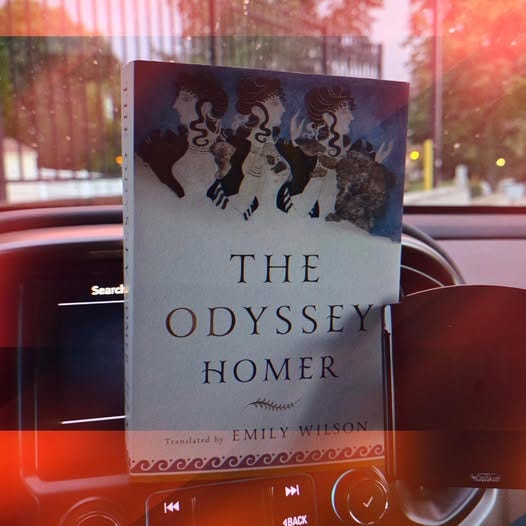
I chose Emily Wilson’s plain-English, iambic-pentameter translation of the book because it was getting a lot of press and was available at my local bookstore. I’m no expert in the text, but I can say that I enjoyed the straightforward presentation.
That same week, I had to go to Wake Forest’s Z. Smith Reynolds Library to look for a book for my research, so I thought I would try to find Daniel Mendelsohn’s well-regarded 2025 translation of The Odyssey on the shelves there.
As used to happen so often when I was an up-and-coming scholar, venturing into the stacks to get one book meant finding several more of interest. In this case, I found probably two dozen versions of The Odyssey on the shelves near Mendelsohn. I took four back to my office.
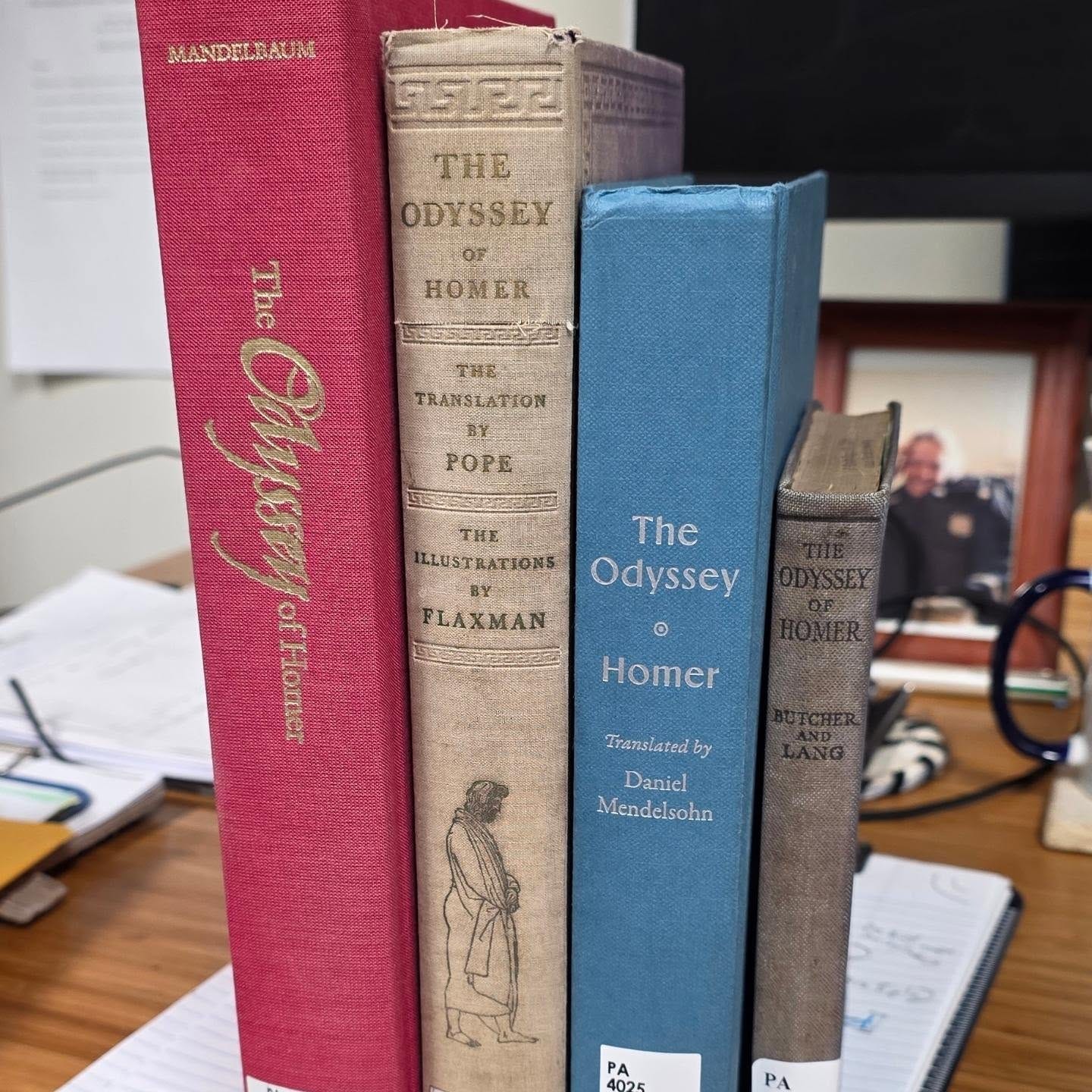
I didn’t have time to read all these translations, but I wanted to compare them. So, I looked at the first line of each. Here are the five I had available.
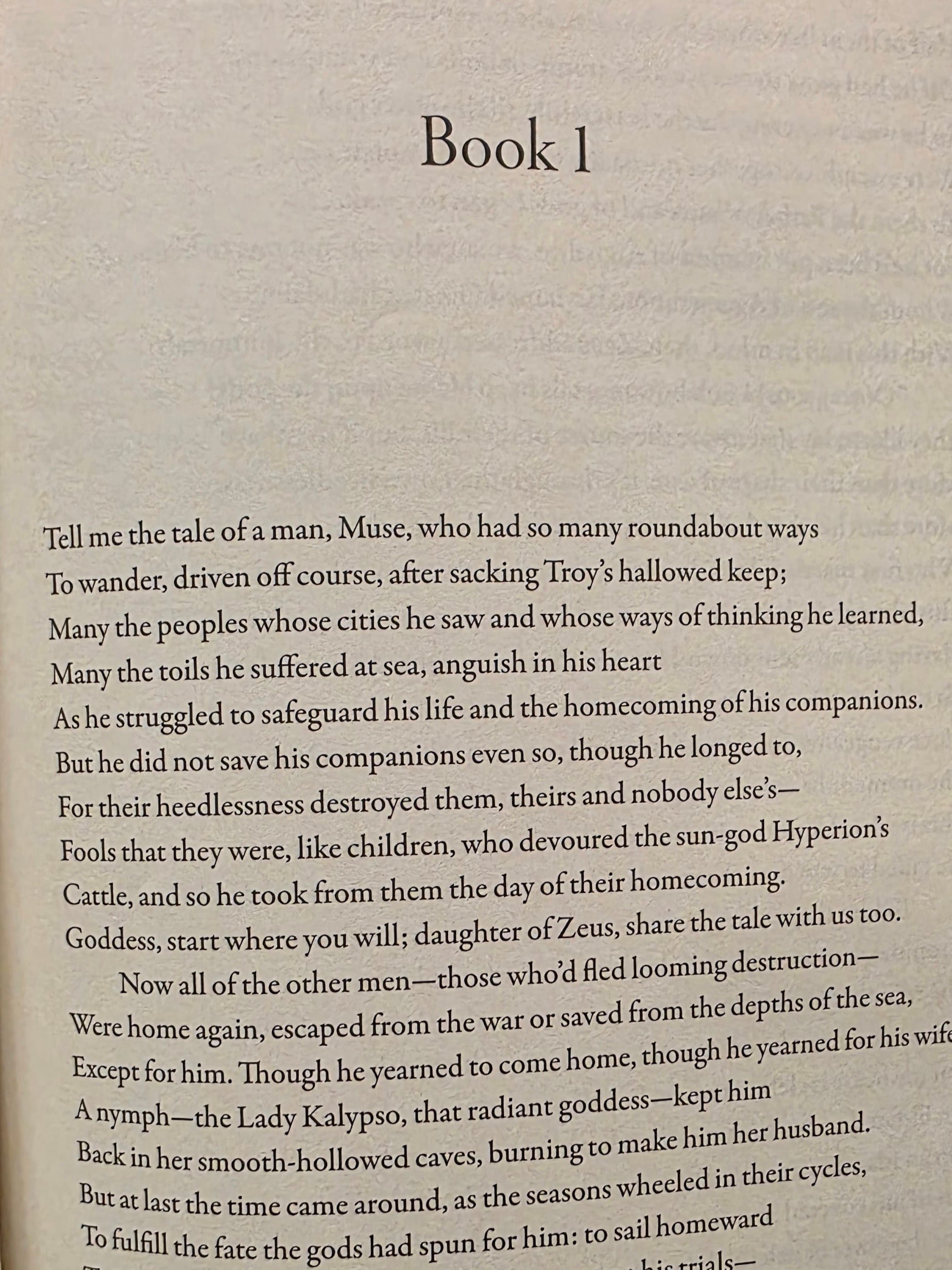
Daniel Mendelsohn (2025):
Tell me the tale of a man, Muse, who had so many roundabout ways
To wander, driven off course, after sacking Troy’s hallowed keep
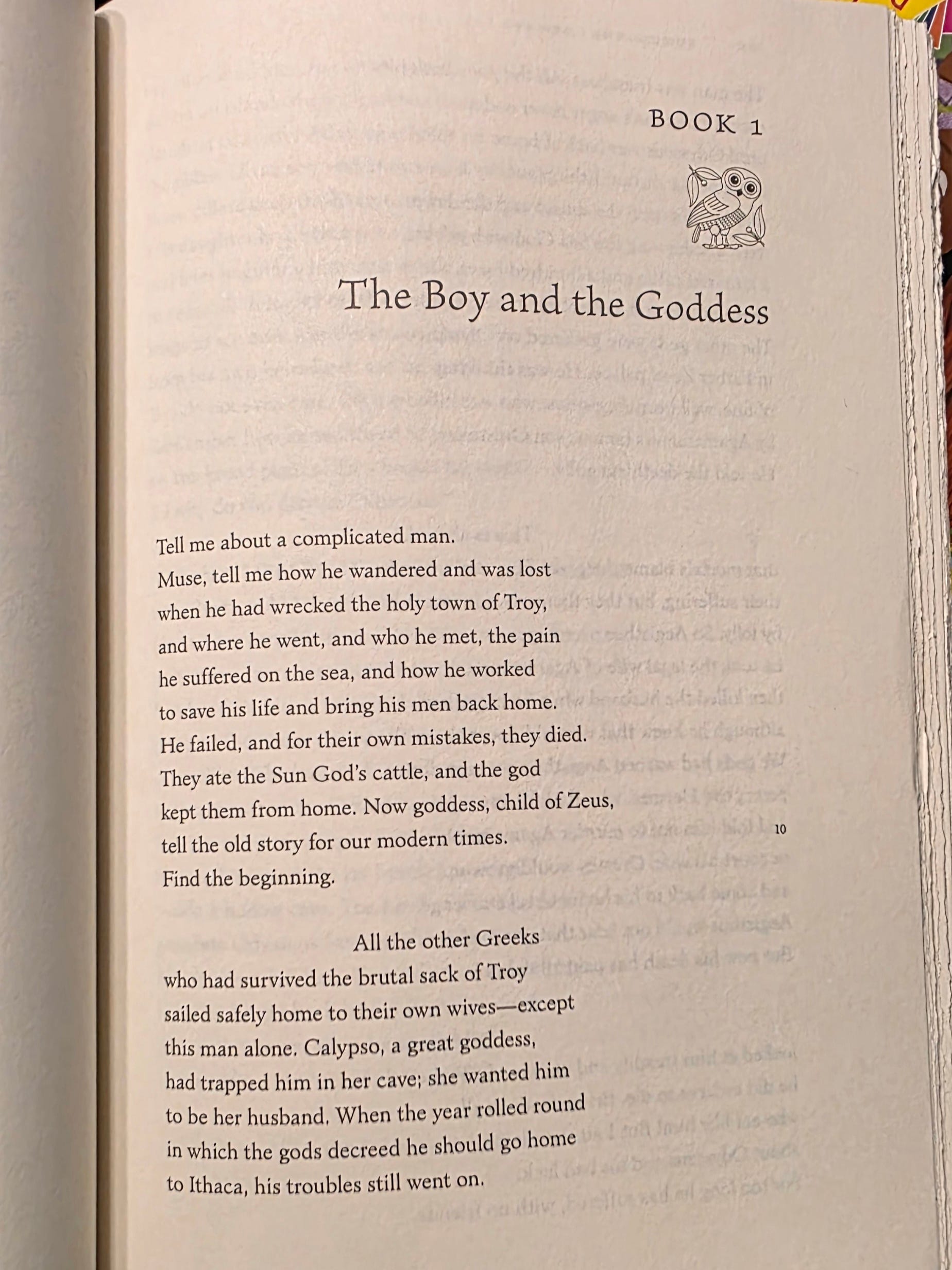
Emily Wilson (2017):
Tell me about a complicated man.
Muse, tell me how he wandered and was lost
when he had wrecked the holy town of Troy
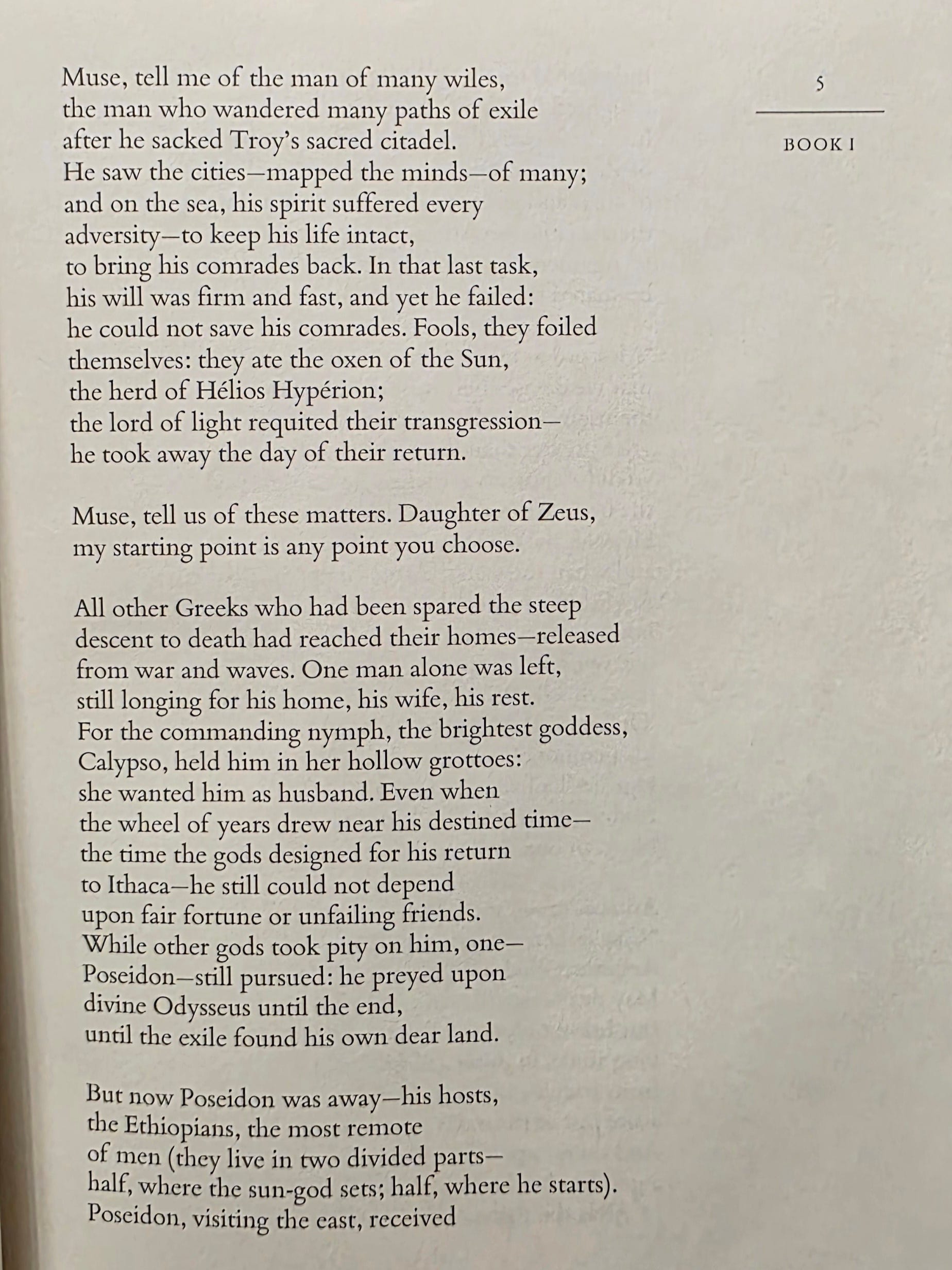
Allen Mandelbaum (1990):
Muse, tell me of the man of many wiles,
the man who wandered many paths of exile
after he sacked Troy’s sacred citadel.
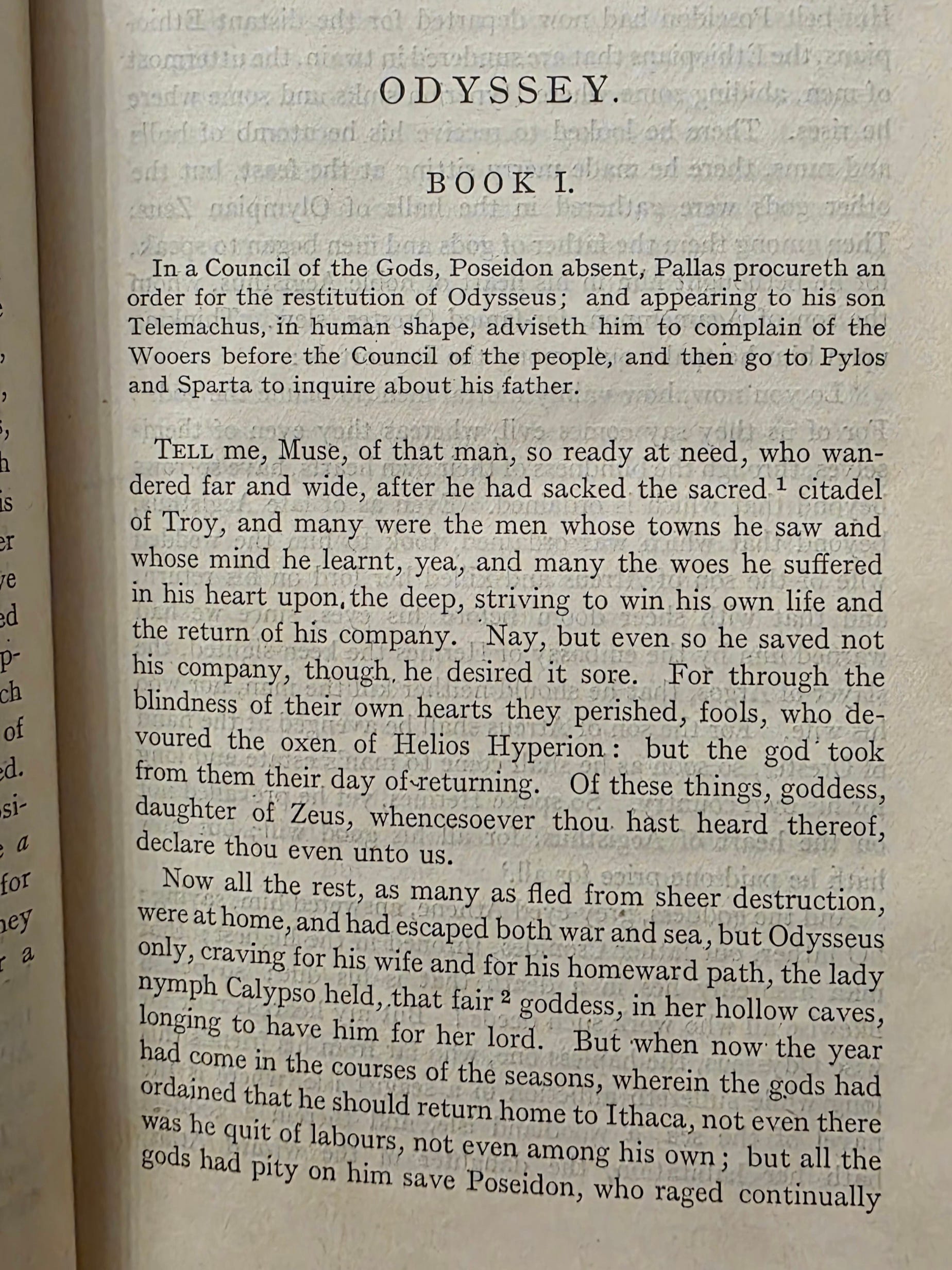
Butcher and Lang (1879)
Tell me, Muse, of that man, so ready at need, who wandered far and wide, after he had sacked the sacred citadel of Troy. . .
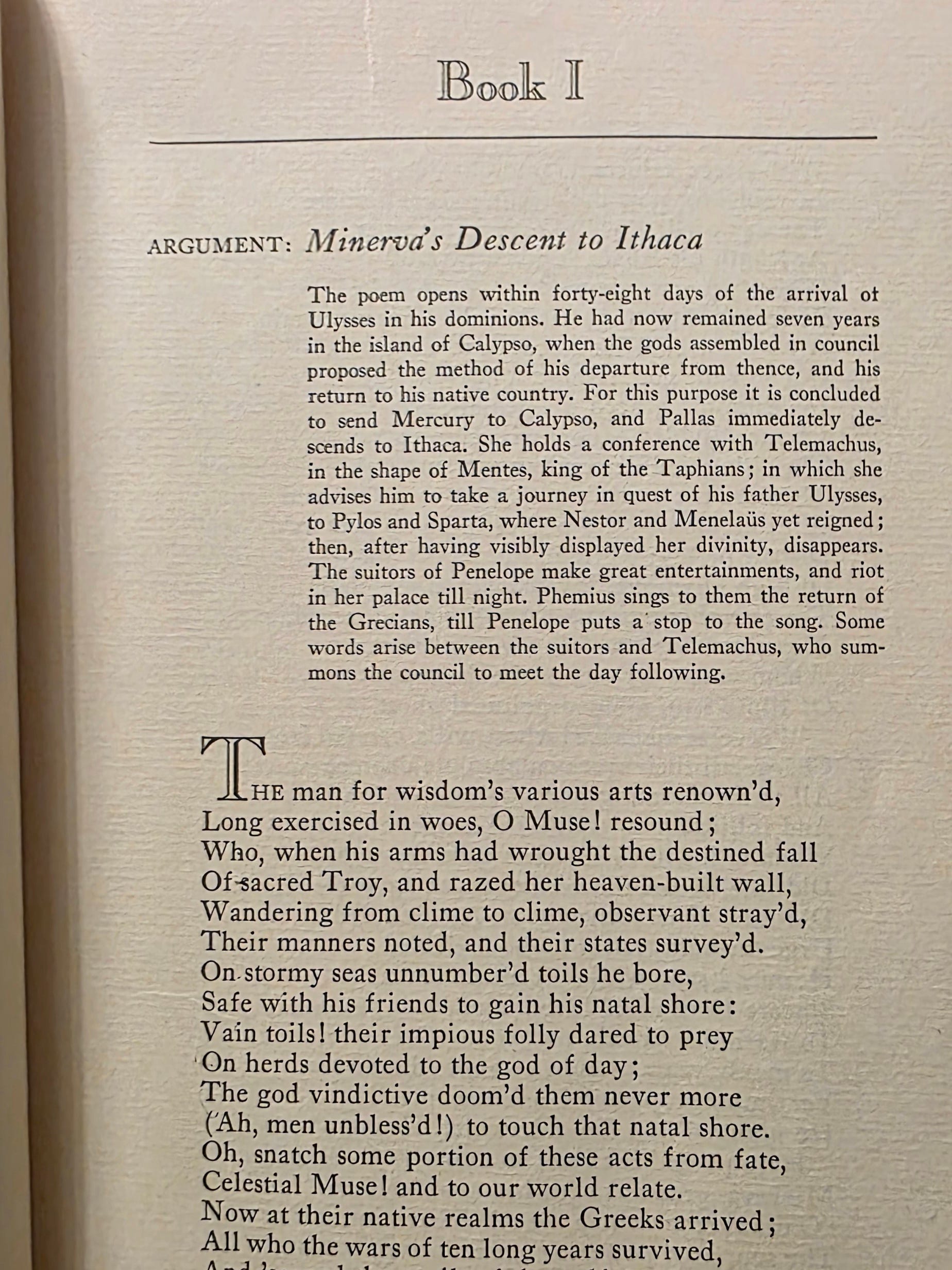
Alexander Pope, with Broome and Fenton (1725-26):
The man for wisdom’s various arts renown’d,
Long exercised in woes, O Muse! resound;
Who, when his arms had wrought the destined fall
Of sacred Troy, and razed her heaven-built wall
When I originally posted this on social media, I noted that I have a favorite among these five translations and asked my followers to share their own favorite.
I added, if you prefer another translation beyond these five, please share it!
A friend of mine from college said his favorite translation was his own. Watch for tomorrow’s post and see his translation and how he came to it.
The Fitzgerald translation (1974) is the translation that was assigned in college, and the only one I've read all the way through. I haven't read it since the late 1990s, when I found it while going through boxes after moving, but I remember it as being wonderful. It isn't in rhyme, or I don't remember it being in rhyme, but it was suitable for a bunch of college students in the early '80s.
I studied the Fagles translation when I was in school:
Sing to me of the man, Muse, the man of twists and turns …
driven time and again off course, once he had plundered
the hallowed heights of Troy.